Hinges and handles
Salt air and your windows: why coastal hinges and handles wear out early
By MK Window and Door Repairs · · 4 min read
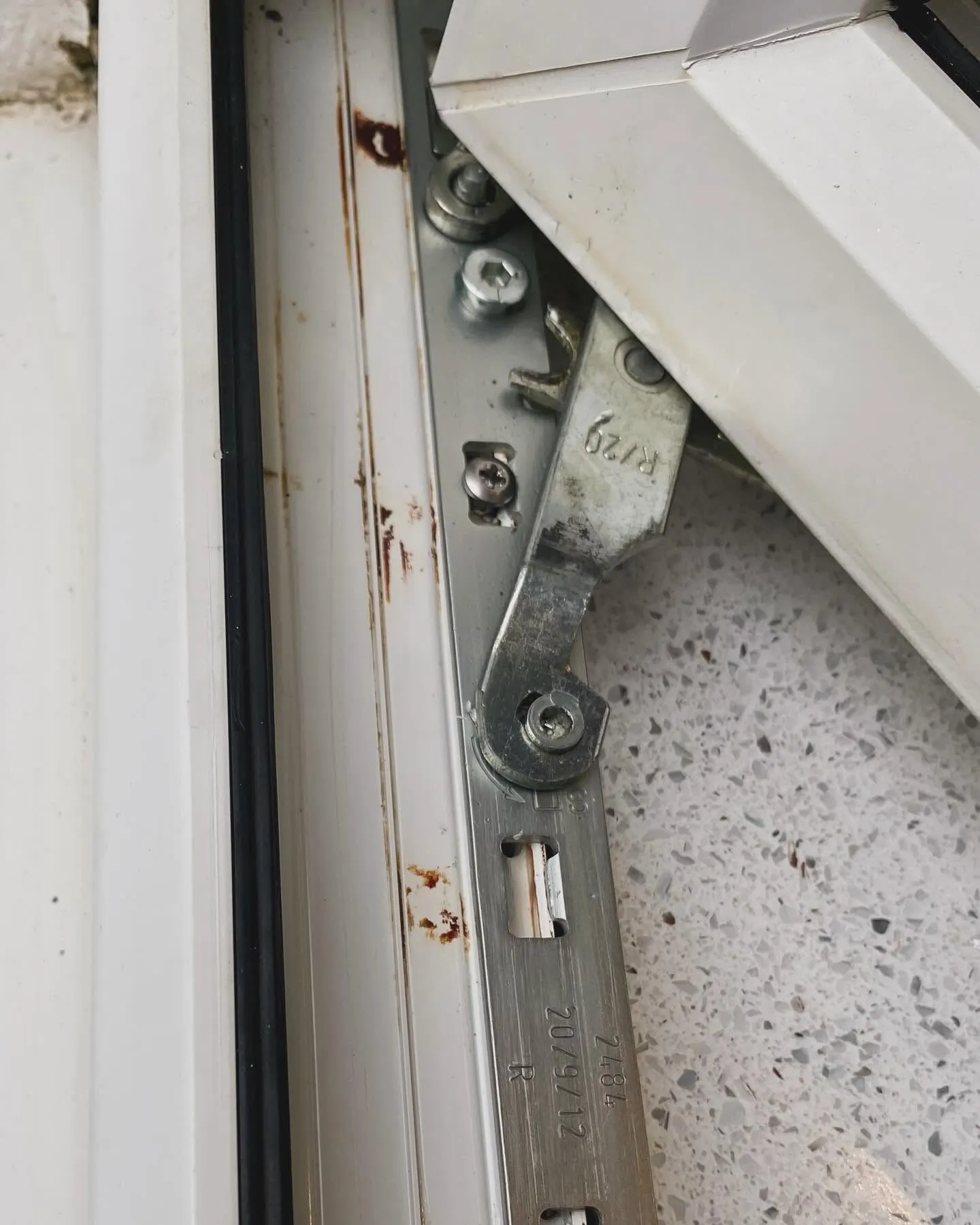
Padstow, Polzeath, Rock, Trevone, Port Isaac, Newquay: the closer a house is to the Atlantic, the more often we are replacing its window hinges. Salt does to a window's moving parts what it does to a car left on the seafront. This is what to look for and how to avoid doing it twice.
What salt does to a window
Onshore winds carry fine salt spray a surprising distance inland, well beyond the houses that actually overlook the sea. It settles on every outside surface and, because window hinges live in the rebate between the sash and the frame, it collects there and stays damp. Ordinary plated steel hinges rust from the rivets and pivot points outwards. Zinc alloy handles and lock components pit and seize. Even the small screws holding the hardware corrode and lose their grip.
The result is a set of problems that arrive together a few years earlier than they would in a town inland.
The symptoms
- The opening window has dropped and catches or scrapes on the frame as it closes.
- It is stiff to open or will not stay open in a breeze, because the friction stay has seized or lost its grip.
- A draught or whistling on windy nights, because the dropped sash no longer compresses the seal evenly.
- The handle is stiff, wobbly, or turns without pulling the locking points back.
- Brown rust streaks running down the frame from the hinge position.
- The window will not lock, or locks only when pushed hard against the frame.
Friction hinges explained
Most uPVC and aluminium casement windows fitted since the 1990s open on friction hinges, also called friction stays. These are the flat stainless or plated steel arms in the top and bottom, or both sides, of the opening. They carry the sash, slide it outwards as it opens, and hold it open with friction. They come in standard lengths and stack heights, and the vast majority are direct replacements. Egress hinges that open wide enough for a fire escape, and easy-clean hinges that let the sash slide across for cleaning from inside, are the same idea with extra features.
Once the arms corrode the hinge no longer holds the sash square, and no amount of adjustment will fix it. New hinges are the answer, and the window sits back exactly where it should, closing and locking as it did when new.
Choose the right replacements the first time
Not all hinges are equal. Standard hinges are often mild steel with a zinc plating, which is fine inland but will start to rust again near the coast within a few years. Austenitic stainless steel hinges, usually described as grade 304 or 316, cost a little more and last far longer in salty air. For homes within sight or smell of the sea, stainless is the sensible choice, along with stainless fixing screws so the fixings do not fail before the hinge does. The same goes for handles: choose a good quality handle with a marine-grade or stainless finish rather than a bargain zinc one.
A little maintenance goes a long way
- Rinse the hinges and frame rebates with fresh water a few times a year, especially after a run of strong onshore weather. It removes the salt before it can sit and work.
- Wipe the hinge arms and put a drop of light oil or silicone spray on the pivots. Avoid heavy grease, which traps salt and grit.
- Do not force a stiff hinge. If a window has become hard to open, it is telling you the hinge is on its way. Get it looked at before it drops.
- Keep the drainage slots at the bottom of the outer frame clear so water does not sit in the rebate.
What we do on a coastal hinge job
We check every opener in the house, not just the one you called about, because they were all fitted at the same time and have had the same weather. Worn hinges are replaced like for like, in stainless steel where the location calls for it, the sash is set square, the locking points are checked and adjusted, and any handle that has seized or gone loose is changed while we are there. It is a quick visit for most houses and it is exactly the kind of work customers describe in our reviews: efficient, done properly and at a fair price.
More advice
- DoorsWhy uPVC and composite doors drop, stick and refuse to lockA door you have to lift or slam to lock has usually dropped on its hinges. What causes it, why it gets worse, and how realignment fixes it without a new door.
- GlassMisted double glazing: do you really need a new window?Why sealed units mist up, what actually failed, and why the fix is almost always a new glass unit in your existing frame rather than a new window.