Glass
Misted double glazing: do you really need a new window?
By MK Window and Door Repairs · · 4 min read
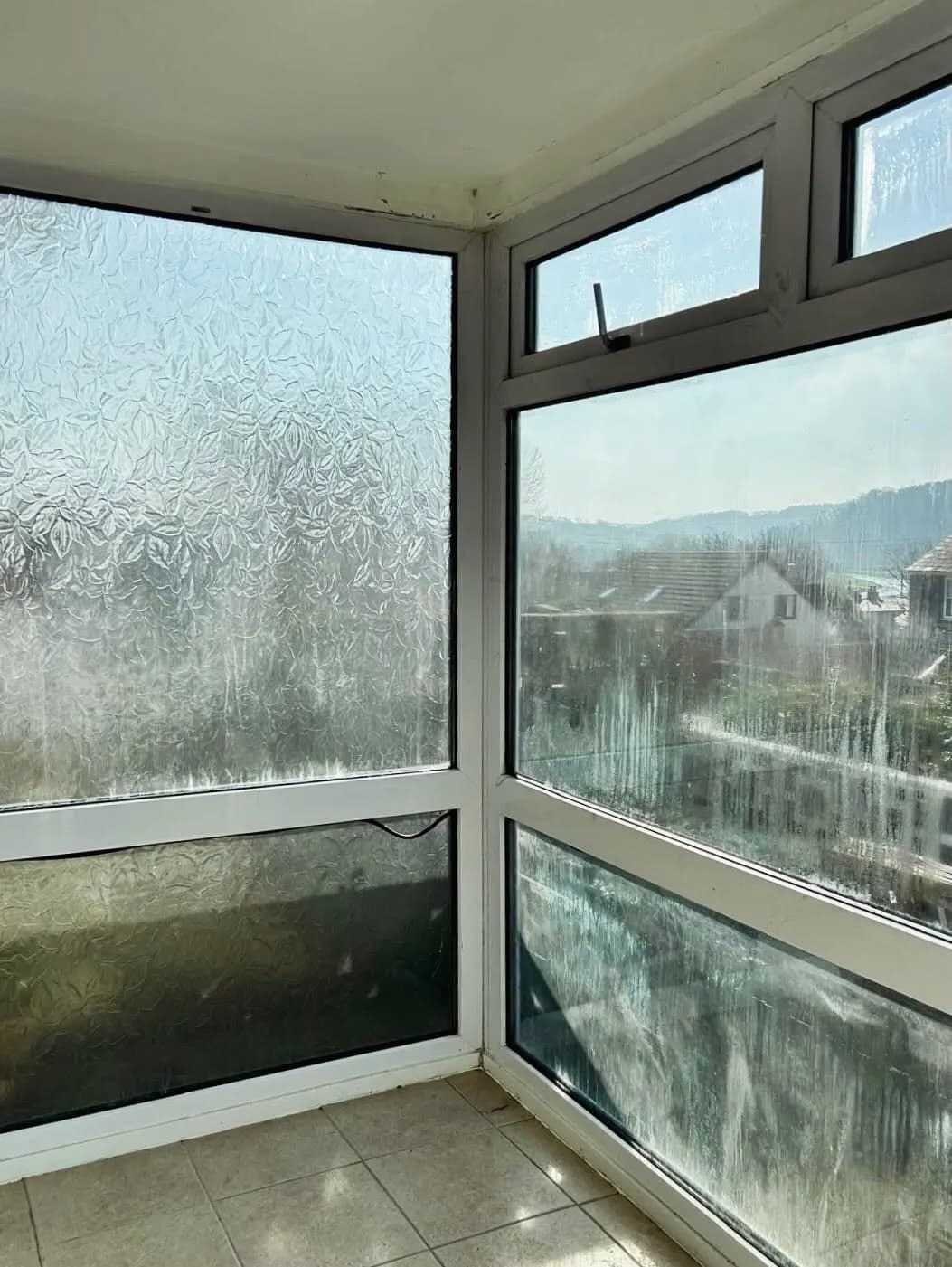
Steamed-up glass is the single most common reason people get in touch with us, and it is also the one where customers have most often been told they need a whole new window. In the vast majority of cases they do not. Here is what has actually happened inside the glass, and what the proper repair looks like.
What a double glazed unit actually is
A double glazed window is two separate parts: the frame, and the sealed glass unit that sits inside it. The unit is two panes of glass held apart by a spacer bar around the edge, with the gap between them sealed and either dried air or argon gas inside. The spacer bar contains a desiccant, a drying agent that soaks up any moisture left inside when the unit was made.
The frame and the glass unit have completely different lifespans. A uPVC, timber or aluminium frame that is sound today is usually good for many more years. The sealed unit is the part that wears out.
Why the glass mists up
The edge seal around the unit is a flexible sealant, and over the years it slowly breaks down. Sunlight, the constant expansion and contraction of the glass through hot and cold days, water sitting in the frame drainage and, on the north Cornwall coast, salt-laden wind all take their toll. Once the seal lets air through, damp air gets into the gap. The desiccant absorbs it for a while, which is why a failed unit can look fine for months, but once the desiccant is saturated the moisture has nowhere to go and it condenses on the inside faces of the glass.
That is the misting you can see but cannot wipe off. Left long enough it leaves a permanent milky film or streaks as minerals in the water dry onto the glass, and the unit loses most of its insulating value because the dry air or argon has escaped.
Which side is the condensation on?
Before you assume the unit has failed, check where the moisture is, because the three possibilities mean three different things.
- On the inside face of the room-side pane, where you can wipe it off, it is ordinary condensation from warm damp indoor air meeting cold glass. That is a ventilation and heating issue, not a fault with the window.
- On the outside face, usually on cold clear mornings, it is dew. Modern energy-efficient glass keeps the outer pane cold enough for this to happen and it is actually a sign the unit is working well.
- Between the two panes, where you cannot reach it from either side, the seal has failed. This is the one that needs a new unit.
Why replacing the unit beats replacing the window
A new sealed unit is measured to the exact size and thickness of the old one, made up at a glass works, and fitted back into the same frame using new glazing beads or gaskets where needed. The frame, the hinges, the handle, the locking and the surrounding plaster and render are all left alone. Compared with a new window there is far less disruption, a much smaller bill, and you keep frames that may well match the rest of the house better than a new one would.
Customers regularly tell us they had been quoted for full replacement windows before they called. Angela in one of our Google reviews put it plainly: other people had said her doors would need replacing, and they did not. Glass is no different. Unless the frame itself is rotten, cracked, badly distorted or the window is single glazed, replacing the unit is the sensible repair.
When a new window really is the right answer
We are repairers first, but we will always say so when a repair is not worth doing. Frames with rot through the sill or lower rails, aluminium frames with no thermal break that stream with condensation, uPVC that has gone brittle and cracked at the welds, or a window that has been badly fitted and lets water into the wall all fall into that category. In those cases we can supply and fit a replacement, and we will explain why before you commit to anything.
What to expect when we replace a unit
- Send us a photo of the misted window by text, WhatsApp or email. It helps to include a shot of the whole window so we can see the frame type and how it is glazed.
- We visit to measure the unit and check the frame, beads, gaskets and drainage while we are there. If a hinge or handle is on its way out we will mention it so it can be done on the same visit.
- The unit is made to size, usually including any obscure, toughened or laminated glass the original had. Bathroom windows and glass in doors or beside doors normally need safety glass and we specify it.
- We return to fit it. A straightforward unit is out and back in well within the hour, with the old glass taken away.
More advice
- Hinges and handlesSalt air and your windows: why coastal hinges and handles wear out earlyHomes near the north Cornwall coast get through window hardware faster. How salt corrodes friction hinges and handles, what the symptoms are, and what to replace them with.
- DoorsWhy uPVC and composite doors drop, stick and refuse to lockA door you have to lift or slam to lock has usually dropped on its hinges. What causes it, why it gets worse, and how realignment fixes it without a new door.